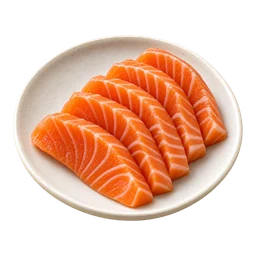
Salmon sashimi
raw farmed salmon, sliced · Meat, fish & eggs
Also known as sake sashimi, sashimi, raw salmon, salmon
High in cholesterol
Salmon sashimi has 223 kcal and 20 g protein per 100 g, with 0.1 g carbs and 17 g fat. One slice (≈15 g) has 33 kcal and 2.9 g protein.
- Calories per 100 g
- 223kcal
- Protein per 100 g
- 20g
- Carbs per 100 g
- 0.1g
- Fat per 100 g
- 17g
Per 100 g.
Nutrition facts
| Per 100 g | Per slice (≈15 g) | |
|---|---|---|
| Calories | 223 kcal | 33 kcal |
| Protein | 20 g | 2.9 g |
| Carbohydrates | 0.1 g | 0 g |
| Sugar | 0 g | 0 g |
| Fiber | 0 g | 0 g |
| Fat | 17 g | 2.6 g |
| Saturated fat | 2.4 g | 0.4 g |
| Sodium | 43 mg | 6.5 mg |
| Cholesterol | 64 mg | 9.6 mg |
| Potassium | 380 mg | 57 mg |
| Calcium | 5 mg | 0.8 mg |
| Iron | 0.3 mg | 0 mg |
“High” marks 20% or more of the FDA daily value in 100 g, the threshold nutrition labels use. It applies to saturated fat, sodium and cholesterol, which are limits rather than targets.
Where the calories come from
- 34%Protein
- 0%Carbs
- 66%Fat
8.8 g protein per 100 kcal
Portions
Track it in Vytal, free
Log by weight, portion or photo and see it against calorie and protein targets built for you.
More meat, fish & eggs

Typical reference values from public food composition databases. Brands, recipes and preparation vary, so a packaged product’s label is the better source for that product. Where these numbers come from