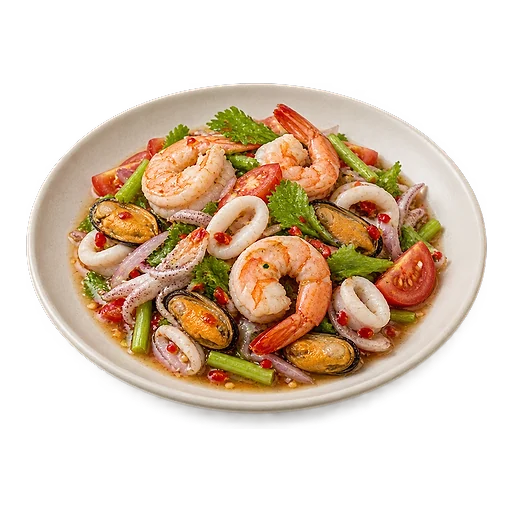
Yum talay
spicy mixed seafood salad · Prepared meals
Also known as yam talay, seafood salad, yum ruam mit, ยำทะเล
High in sodium
Yum talay has 82 kcal and 9.7 g protein per 100 g, with 8.4 g carbs and 1.3 g fat. One plate (≈250 g) has 205 kcal and 24 g protein.
- Calories per 100 g
- 82kcal
- Protein per 100 g
- 9.7g
- Carbs per 100 g
- 8.4g
- Fat per 100 g
- 1.3g
Per 100 g.
Nutrition facts
| Per 100 g | Per plate (≈250 g) | |
|---|---|---|
| Calories | 82 kcal | 205 kcal |
| Protein | 9.7 g | 24 g |
| Carbohydrates | 8.4 g | 21 g |
| Sugar | 7.5 g | 19 g |
| Fiber | 0.9 g | 2.3 g |
| Fat | 1.3 g | 3.3 g |
| Saturated fat | 0.6 g | 1.5 g |
| Sodium | 649 mg | 1,623 mg |
| Cholesterol | 393 mg | 983 mg |
| Potassium | 158 mg | 395 mg |
| Calcium | 28 mg | 70 mg |
| Iron | 0.5 mg | 1.3 mg |
“High” marks 20% or more of the FDA daily value in 100 g, the threshold nutrition labels use. For protein and fiber that is a plus; saturated fat and sodium are limits rather than targets.
Where the calories come from
- 46%Protein
- 40%Carbs
- 14%Fat
11.8 g protein per 100 kcal
Track it in Vytal, free
Log by weight, portion or photo and see it against calorie and protein targets built for you.
More prepared meals
Typical reference values from public food composition databases. Brands, recipes and preparation vary, so a packaged product’s label is the better source for that product. Where these numbers come from