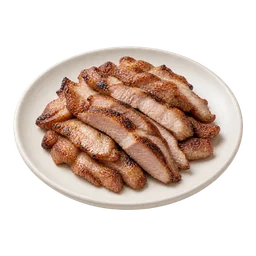
Kor moo yang
grilled marinated pork neck · Meat, fish & eggs
Also known as grilled pork neck, kho mu yang, pork neck, moo yang
High in protein
Kor moo yang has 335 kcal and 24 g protein per 100 g, with 6.2 g carbs and 24 g fat. One serving (≈100 g) has 335 kcal and 24 g protein.
- Calories per 100 g
- 335kcal
- Protein per 100 g
- 24g
- Carbs per 100 g
- 6.2g
- Fat per 100 g
- 24g
Per 100 g.
Nutrition facts
| Per 100 g | Per serving (≈100 g) | |
|---|---|---|
| Calories | 335 kcal | 335 kcal |
| Protein | 24 g | 24 g |
| Carbohydrates | 6.2 g | 6.2 g |
| Sugar | 5 g | 5 g |
| Fiber | 0 g | 0 g |
| Fat | 24 g | 24 g |
| Sodium | 257 mg | 257 mg |
| Iron | 1.4 mg | 1.4 mg |
“High” marks 20% or more of the FDA daily value in 100 g, the threshold nutrition labels use. For protein and fiber that is a plus; saturated fat and sodium are limits rather than targets.
Where the calories come from
- 29%Protein
- 7%Carbs
- 64%Fat
7.3 g protein per 100 kcal
Track it in Vytal, free
Log by weight, portion or photo and see it against calorie and protein targets built for you.
More meat, fish & eggs
Typical reference values from public food composition databases. Brands, recipes and preparation vary, so a packaged product’s label is the better source for that product. Where these numbers come from