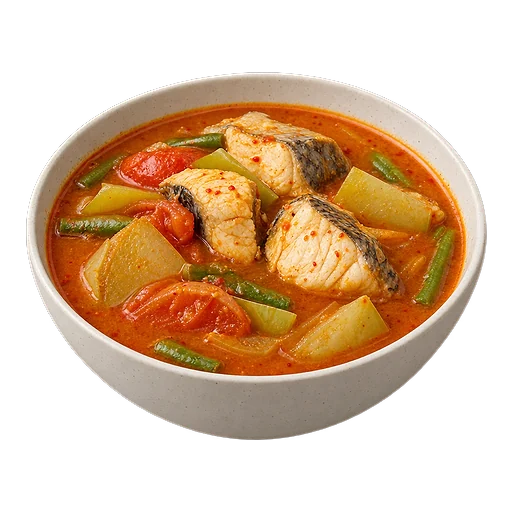
Gaeng Som
saures tamarinden-curry mit fisch und gemüse · Gerichte
Auch bekannt als kaeng som, saures curry, thailändisches saures curry
Gaeng Som enthält 42 kcal und 4,5 g Protein pro 100 g, dazu 6 g Kohlenhydrate und 0,5 g Fett. 1 Schüssel (≈350 g) liefert 147 kcal und 16 g Protein.
- Kalorien pro 100 g
- 42kcal
- Protein pro 100 g
- 4,5g
- Kohlenhydrate pro 100 g
- 6g
- Fett pro 100 g
- 0,5g
Pro 100 g.
Nährwerte
| Pro 100 g | Pro Schüssel (≈350 g) | |
|---|---|---|
| Kalorien | 42 kcal | 147 kcal |
| Protein | 4,5 g | 16 g |
| Kohlenhydrate | 6 g | 21 g |
| Zucker | 4 g | 14 g |
| Ballaststoffe | 1,8 g | 6,3 g |
| Fett | 0,5 g | 1,8 g |
| Gesättigte Fettsäuren | 0,1 g | 0,4 g |
| Natrium | 380 mg | 1.330 mg |
| Cholesterin | 20 mg | 70 mg |
| Kalium | 120 mg | 420 mg |
| Calcium | 30 mg | 105 mg |
| Eisen | 0,8 mg | 2,8 mg |
Woher die Kalorien kommen
- 39 %Protein
- 51 %Kohlenhydrate
- 10 %Fett
10,7 g Protein pro 100 kcal

Kostenlos mit Vytal tracken
Trag es nach Gewicht, Portion oder per Foto ein und sieh, wie es zu deinen persönlichen Kalorien- und Proteinzielen passt.
Mehr Gerichte






Typische Referenzwerte aus öffentlichen Nährwertdatenbanken. Da Marken, Rezepte und Zubereitung variieren, ist das Etikett bei verpackten Produkten die bessere Quelle. Woher diese Werte stammen